GeoNet beta

You're viewing phase one of the GeoNet beta site. Features and content may change. Read this news article to find out what's happening. www.geonet.org.nz continues to run as usual.

Okataina

0
Alert level
Alert level: 0 ACC: Green
State The overall status of the volcano in relation to volcanic activity.
No unrest
Volcanic activity The specific level of activity currently observed.
No volcanic unrest.
Most Likely Hazards The types of hazards and where they could affect people and property at this alert level.
Volcanic environment hazards.

An eruption may occur at any level, and levels may not move in sequence as activity can change rapidly.

All volcanoes
Caldera Large crater volcano, without significant topography.

Overview

The Okataina Volcanic Centre includes Tarawera, source of the most lethal eruption in New Zealand's recorded history.
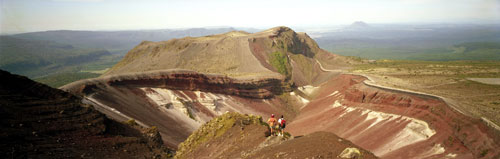
The Okataina Volcanic Centre extends from Lake Rotoma in the north to Waiotapu in the south. It includes the large, young volcanoes of Tarawera and Haroharo, with others at Okareka and Rotoma. More than 35 vents have been active at Okataina during the last 21,000 years.

Most Recent Eruption

When
June 1886
Where
Tarawera
Effects
The 1886 eruption is the most lethal to have occurred in New Zealand’s recorded history. Rumblings from the Tarawera eruption were heard as far south as Blenheim, in the South Island. During the eruption a series of large explosions opened up a rift 17 km long, which expelled ash and rocks for a few hours. When hot magma came into contact with Lake Rotomahana, huge explosions covered the region with mud and ash up to one metre deep and many buildings collapsed. Three villages were buried under hot heavy ash and mud and 108 people killed, the Māori village of Te Wairoa, its Pa and whares were completely buried. The Pink and White Terraces, considered one of the great natural wonders of the world were also destroyed.