GeoNet beta

You're viewing phase one of the GeoNet beta site. Features and content may change. Read this news article to find out what's happening. www.geonet.org.nz continues to run as usual.

Ngauruhoe

0
Alert level
Alert level: 0 ACC: Green
State The overall status of the volcano in relation to volcanic activity.
No unrest
Volcanic activity The specific level of activity currently observed.
No volcanic unrest.
Most Likely Hazards The types of hazards and where they could affect people and property at this alert level.
Volcanic environment hazards.

An eruption may occur at any level, and levels may not move in sequence as activity can change rapidly.

All volcanoes
Vent Place where volcanic material is erupted.

Overview

Ngauruhoe is a young cone that has grown on the south end of the Tongariro complex.
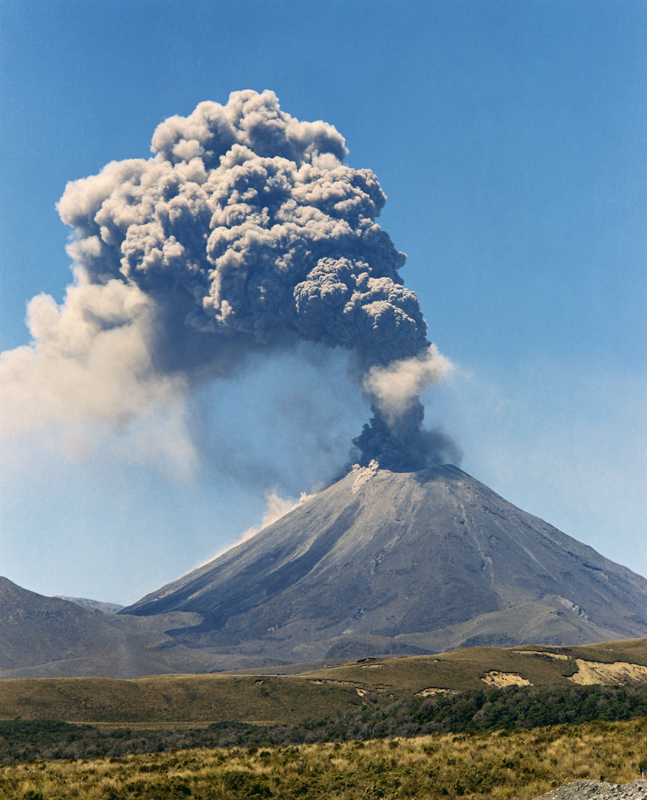
Eruption of Ngauruhoe, 1974.
Hide caption

Eruption of Ngauruhoe, 1974.

Ngauruhoe is the largest and youngest of the Tongariro cones being about 7,000 years old. Ngauruhoe is the most continuously active of the volcanoes in New Zealand, with the Māori recording many eruptions prior to European colonisation. The first European description was an eruption in 1839. Many of the recent eruptions have produced lava flows down the side of the cone, the last having been in 1954.

Most Recent Eruption

When
1973 to 1975
Where
Ngauruhoe
Effects
In January 1973, Ngauruhoe discharged red-hot blocks of lava, and periodic activity continued throughout the year. In 1974 and 1975 there were explosive eruptions of ash, and blocks of lava were thrown as far as 3 km away. During the last violent eruption, gases streamed from the crater for several hours, producing a churning plume of ash that towered up to 13 km above the crater. This column then collapsed and formed ash and scoria avalanches that swept down the sides of Ngauruhoe, leaving trails of rubble in their wake.